Tuesday, 4 November 2014

Your Colonoscopy: 7 Common Myths Debunked

Myth #1: “I’m not at risk for colon cancer.”

The truth is: Everyone is at risk, One in eighteen American men and women will get colon cancer in their lifetime. Adults above age 50 need to have a colonoscopy because the great majority of colorectal polyps – which are the precursors of colon cancer – occur after age 50. Removing polyps prevents colorectal cancer.


Myth #2: “If I don’t have any symptoms, I don’t need a colonoscopy.”

In nearly all cases, colon cancer starts as a precancerous growth in your colon, which usually doesn’t cause symptoms. A colonoscopy detects polyps so doctors can remove them before they turn into cancer. The idea is to do this before they cause symptoms. On average, endoscopists performing colonoscopies find precancerous polyps in 15 percent of women and 25 percent of men age 50 or over.


Myth #3: “There’s no way I can drink that prep stuff!”

Drinking a bowel preparation is one of the leading deterrents to having colonoscopy. The good news: Today’s bowel prep is easier than before. Rather than having to choke down a gallon of solution, patients can choose half-gallon options. What’s more, many physicians prescribe a split dose, where you take half the prep the night before and the other half on the morning of the procedure.


Myth #4: “A colonoscopy isn’t accurate.”

In 2008, a study reporting that colonoscopies may not completely protect against getting colon cancer gained a lot of media attention. But in that study, many colonoscopies were not complete and performed by general internists and family physicians who may not have had adequate experience to do the colonoscopy well.
More recent studies confirm that experience really matters when you choose who performs your colonoscopies. For a high quality colonoscopy, make sure your physician has specialized training in performing colonoscopies and tracks his or her outcomes as part of performance improvement.


Myth #5: “A colonoscopy is too painful!” or “I can’t be sedated enough.”

Actually, 99 percent of patients are adequately sedated through conscious sedation or twilight sleep and can be comfortable during their colonoscopy. Most patients don’t even remember the exam! Some hospitals also offer monitored anesthesia care for patients who require deeper sedation. 


Myth #6: “It’s too risky. My friend had his colon perforated during a colonoscopy.”

When performed by specially trained professionals, colonoscopies are extremely safe. The risk of perforation is less than 1 in 1,000 cases, and the risk of bleeding is less than 1 percent.

Myth #7: “If I get colorectal cancer, then it was meant to be.”

Not true. Colon cancer is preventable. Here’s how: Begin screening for colon cancer (colonoscopy is the preferred screening strategy) at age 50, or earlier if you have risk factors. Other things you can do: Improve your diet, maintain a normal body weight, exercise and avoid smoking.


Source: Cleveland Clinic

Friday, 24 October 2014

Diverticular Disease: Greatest Myths and Facts

Myth 1: If you have diverticular disease, you should avoid eating nuts, seeds and popcorn

Fact: This most persistent myth actually contradicts advice doctors give for preventing the condition in the first place. A healthy, high-fiber diet is actually the best medicine against diverticulitis, and seeds and nuts certainly fit the bill.
We used to think that a seed or nut plugged the pocket in the colon, and that’s what caused it to become inflamed or to rupture. But no surgeon has ever seen that, and studies have strongly suggested there’s nothing to that idea.


Myth 2Diverticular disease always requires treatment

Fact: Patients often confuse the related conditions diverticulosis and diverticulitis.
Diverticulosis generally needs no treatment, while diverticulitis is a more serious condition that may require surgery.
Diverticulosis refers to small pockets that protrude through weak muscle layers in the intestinal wall, similar to a bubble in a tire. They’re fairly common. Sixty percent of people have them by age 60. Up to eighty percent of people have them by age 80.
A colonoscopy usually brings this condition to light, and it’s a very incidental finding. Most people don’t even realize they have the pockets, and by themselves, they are little cause for concern. Diverticulosis is like having freckles: It’s only a problem if those freckles turn into a mole. We don’t operate, ever, on diverticulosis.
Diverticulitis occurs when one or more of those pockets are blocked by waste and inflammation or an infection occurs, or when pockets rupture and bacteria that are normally in your stool get outside of the intestines and into the surrounding abdominal area.
When this happens, a variety of complications can arise:
  • You may experience pain and/or a fever.
  • An abscess, or “walled-off” infection, may result from the bacteria in the abdomen.
  • A painful infection of the abdominal cavity, or what we call peritonitis, occurs. Peritonitis is potentially fatal. Also, while it’s very uncommon, it does require immediate treatment.
Not everybody who has diverticulitis needs surgery, but they should see a physician, either in primary care or the emergency room, to get a proper diagnosis.


Myth 3: If you’ve had diverticulosis that developed into diverticulitis in the past, subsequent bouts of diverticulitis are more likely to perforate (and lead to peritonitis)

Fact: Diverticulitis happens in only 10 – 25 percent of those with diverticulosis. Also the great majority, or 75 percent, of those cases are the less serious type – requiring simple outpatient treatment, and perhaps medication.
Research shows the next bout of diverticulitis is most often going to be similar to your first bout. Usually, if your body could handle diverticulitis the first time, then the next time, it’s going to react just as well.
Lots of patients ask, “How do I prevent myself from getting diverticulitis?” Unfortunately, we don’t know why people get it. We think it’s from high pressure in the bowels and being constipated. We suggest eating a high-fiber, healthy diet and avoiding constipation.

Source: Cleveland Clinic

Monday, 20 October 2014

5 Facts You Should Know About Your Poops


There is no normal

People are different. So are bowel movements. The size, shape and consistency of feces will change greatly from person to person.
Instead of looking for “normal,” look for a change. Did you use to move your bowels frequently but now have trouble doing so? Did they use to be solid but now are runny for a long period of time? When you experience a big, noticeable change that lasts, it’s time to see your doctor.


Blood is a warning sign

If there is blood in your feces on a recurring basis, see a doctor. Blood can be a sign of polyps or colorectal cancer. It also can be caused by benign conditions such as hemorrhoids and anal fissures. In any case, it’s worth getting checked out.
If you see blood, keep an eye out for other symptoms: weight loss, fever, chills. When they come together, those are “high-alert” symptoms of bowel disorders.


Sometimes size is a concern

If you used to have sizeable stools but now they are always pencil thin and hard to pass, consult your doctor. In certain types of colon cancer, the bowel gets narrow, and so do your bowel movements.
Thin stools do not automatically mean cancer. But if they last a long time and if going to the bathroom is difficult for you, your doctor may order a colonoscopy to rule it out.

Consistency matters

We all have bouts of diarrhea from time to time. Runny, watery stool over a short period of time can mean mild food poisoning or an infection, for example.
But if you used to have solid bowel movements and now have diarrhea frequently, it could be a sign of an inflammatory bowel disease such as Crohn’s disease or ulcerative colitis — especially if it comes with other symptoms such as abdominal pain, blood and weight loss.

It could be stress

Your body reacts to things that go on around us. The impact of stress and unresolved issues may show up in your bathroom.
Your bowels may be indicating something that you’re not appreciating consciously. If your bathroom habits have changed drastically and other medical causes have been excluded, life’s stresses may be to blame.
Pay attention to what your bowels are telling you. From stress to medical conditions, they may give you warning sings that will help you improve your health.


Source: Dr Brooke Gurland, MD, Cleveland Clinic

Monday, 13 October 2014

Things You Need To Know About Fistula-in-ano

What Is An Anal Abscess?

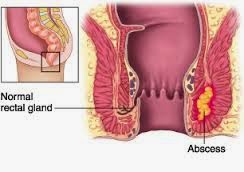
An anal abscess is an infected cavity filled with pus found near the anus or rectum.


What Is An Anal Fistula (Fistula-in-ano)?

An anal fistula is frequently the result of a previous or current anal abscess. The small glands just inside the anus occasionally get clogged and potentially can become infected, leading to an abscess. The fistula is a tunnel that form under the skin and connects the infected glands to the abscess. A fistula can present with or without and abscess and may connect just to the skin of the buttocks near the anal opening. Other causes of fistula include Crohn's disease, tuberculosis, radiation, trauma and malignancy.


How Does Someone Get An Anal Abscess Or A Fistula?

The abscess is most often a result of an acute infection in the internal glands of the anus. Occasionally, bacteria, faecal material or foreign matter can clog the gland and create a condition for an abscess cavity to form.

After an abscess drains on its own or has been drained (opened), a tunnel (fistula) may persist connecting the infected anal gland to the external skin. This typically will involve some type of drainage from the external opening and occurs in up to 50% of the abscesses. If the opening on the skin heals when the fistula is present, a recurrent abscess may develop.


What Are The Signs And Symptoms Of An Abscess Or Fistula?

A patient with an abscess may have pain, redness or swelling around the anal area. Fever or chills are also common. In a patient with a fistula, there will be additional symptoms of irritation of the perianal skin or drainage from an external opening.


Is Any Specific Testing Necessary To Diagnose An Abscess Of Fistula?

No. Most of the abscesses or fistula are diagnosed and managed on the basis of clinical findings. Occasionally, a MRI or endoanal ultrasound can assist with the diagnosis of deeper abscesses or the delineation of the fistula tunnel to help guide treatment.


What Is The Treatment Of An Anal Abscess?

Surgical drainage is needed under most circumstances. An incision is made in the skin near the anus to drain the pus. It can be performed under local anaesthesia or general anaesthesia for bigger and deeper abscess. The wound would be left open and let it heal by itself. Hospitalisation may be required in patients prone to more significant infections such as diabetics or patients with decreased immunity.


What Is The Treatment Of An Anal Fistula?

Surgery is almost always necessary to cure an anal fistula. Although surgery can be fairly straightforward, it may also be complicated, occasionally requiring staged or multiple operations. It is advisable to consult a colorectal surgeon to discuss the different types of potential operations.

The surgery may be performed at the same time as drainage of an abscess, although sometimes the fistula does not appear until weeks to years after the initial drainage. If the fistula is straightforward, a fistulotomy may be performed. Other procedures include placing material within the fistula tract to occlude it or surgically altering the surrounding tissue to accomplish closure of the fistula, with the choice of procedure depending upon the type, length and location of the fistula.


What Is The Recovery Like From Surgery?

Pain after surgery is controlled with painkillers, fibers and bulk laxatives. Sitz bath is encouraged and to avoid constipation. You can discuss with your surgeon the specific care and time away from work prior to surgery to prepare yourself for post-operative care.


Can The Abscess Or Fistula Recur?

Yes. Both abscesses and fistulas can potentially recur. Should similar symptoms arise, suggesting recurrence, it is recommended that you visit a colorectal surgeon to manage your condition.


Source:ASCRS

Friday, 19 September 2014

Things You Need To Know About Anal Fissure

What Is An Anal Fissure?

An anal fissure is a small, oval-shaped tear in skin that lines the opening of the anus. It causes severe pain and bleeding during bowel movements. It is quite common, but often confused with other causes of pain and bleeding, such as haemorrhoids.


What Are The Symptoms of Anal Fissure?

The symptoms include severe pain during, and especially after a bowel movement, lasting from several minutes to a few hours. There might be bright red blood from the anus that can be seen on toilet paper or on the stool. Between bowel movements, patients with anal fissures are often symptom-free. They are fearful of having a bowel movement and may try to avoid defecation due to the pain.


What Causes Anal Fissure?

They are usually caused by trauma to the inner lining of the anus. Patients with tight anal sphincter muscles (i.e. increased muscle tone) are more prone to developing anal fissures. A hard, dry stool is typically responsible; but loose stools and diarrhoea can also be the cause.

Following a bowel movement, severe anal pain can produce spasm of the anal sphincter muscle, resulting in a decrease in blood flow, thus impaired healing of the wound. The next bowel movement results in more pain, anal spasm, decrease blood flow to the area, and the cycle continues. Treatments are aimed at interrupting this cycle by relaxing the anal sphincter muscle to promote healing of the fissure.

Other less common causes include inflammatory conditions and certain anal infections or tumours. Anal fissures may be acute (recent onset) or chronic (present for a long period of time). Chronic fissures may be more difficult to treat, and usually will have an external lump (sentinel pile or skin tag).


What Is The Treatment Of Anal Fissures?

Majority do not require surgery. The treatment of acute fissure consists of high fiber diet, increased water intake and stool softeners. Topical anaesthetics for pain and warm sitz baths for 10-20 minutes several times a day (after bowel movements) are soothing and promote relaxation of anal muscles.

Other medications (nitroglycerin, nifedipine, diltiazem cream) can be prescribed to allow relaxation of the anal sphincters. Chronic fissures are generally more difficult to treat and may need surgical treatment.


Will The Problem Return?

Yes. It is quite common for a fully healed fissure to recur after a hard bowel movement or other trauma. It is very important to continue good bowel habits and a diet high in fiber as a lifestyle change. If the problem returns without an obvious cause, further assessment is warranted.

What Does Surgery Involve?

Surgical options include Botox injection into the anal sphincter and surgical division of a portion of the internal anal sphincter (lateral internal sphincterotomy). Both of these procedures can be performed as outpatient, same-day procedures. The goal of these surgical options is to promote relaxation of the anal sphincter, thereby reducing anal pain and spasm, allowing the fissures to heal. Botox injection results in healing in 50-80% of patients while sphincterotomy is reported to be >90% successful. All surgical procedures carry some risk; and your colorectal surgeon will discuss these risks with you to determine the appropriate treatment for your particular situation.


How Long Is The Recovery After Surgery?

Complete healing can take up to 6-10 weeks. However, acute pain after surgery often disappears after a few days. Most patients will be able to return to work and resume daily activities in a few short days after surgery.

Can Fissure Lead to Colon Cancer?

Absolutely NO. Persistent symptoms, however, need careful evaluation since other conditions can cause similar symptoms. A colonoscopy may be required to exclude other causes of rectal bleeding.


Source: ASCRS

Sunday, 7 September 2014

Things You Need To Know About Diverticular Disease

What Is Diverticulosis/Diverticulitis?
Diverticula are pockets that develop in the colon wall, usually in the sigmoid or left colon, but may involve the entire colon.
Diverticulosis means the presence of these pockets. Diverticulitis are inflammation or complications of these pockets.


What are the Symptoms of Diverticular Disease?
Uncomplicated diverticular disease is usually not associated with symptoms. Symptoms are related to complications of diverticular disease including diverticulitis and bleeding. Diverticular disease is a common cause of significant bleeding from the colon.

Diverticulitis - an infection of the diverticula. It may cause one or more of the following symptoms:
- Pain in the abdomen
- Chills, fever
- Change in bowel habits
More intense symptoms are associated with serious complications such as perforation (rupture), abscess or fistula formation (an abnormal connection between the colon and another organ or the skin).


What is the Cause of Diverticular Disease?
The cause is not precisely known, but it is more common for people with a low fiber diet. It is thought that a low-fiber diet over the years creates increased colon pressure and results in pockets or diverticula.


How Is Diverticular Disease Treated?
Increasing the amount of dietary fiber (grains, legumes, vegetables, etc.) - and sometimes restricting certain food reduces the pressure in the colon and may decrease the risk of complications due to diverticular disease.

Diverticulitis requires different management. Mild cases may be managed with antibiotics, dietary restrictions and possibly stool softeners. More severe cases require hospitalisation with intravenous antibiotics and dietary restrains. Most acute attacks can be relieved with such methods.


When Is Surgery Necessary?
Surgery is reserved for patients with recurrent episodes of diverticulitis, complications or severe attacks when there is no response to medication. Surgery may also be required in individuals with bleeding from diverticulosis.Surgery is also needed if patients developed complications from diverticulitis (stricture, obstruction, fistula).

Surgical treatment for diverticulitis removed the diseased part of colon. Complete recovery can be expected. In emergency surgeries, patients may require a temporary colostomy bag. Patients are encouraged to seek medical attention for abdominal symptoms early to help avoid complications.


Source: ASCRS

Saturday, 30 August 2014

Four simple ways to prevent Hemorrhoids

1. Go when you need to go

This sounds like common-sense advice, but too many people ignore it. If you delay using the bathroom, your stool may become hard and dry in your bowel, which makes it harder to pass. If you strain to pass stool, your risk for hemorrhoids rises.
Speaking of straining, don’t force a bowel movement when you don’t need to go, either. Straining increases the pressure on your venous cushions, which leads to hemorrhoids. In particular, straining can turn internal hemorrhoids into external ones.

2. Don’t turn the bathroom into a library

Think of your time in the bathroom as a necessity, not an extended escape. If your toilet has stacks of magazines or books on the water tank, consider moving them to another room.
Why? The more time you spend on the toilet, the more likely you will strain for bowel movements. Also, the seated position puts extra stress on your anal blood vessels. Both of these factors boost your risk of haemorrhoids.


3. Reassess your diet

To prevent hemorrhoids, you want stool that is soft and easy to pass. You can reach the right consistency by making smart diet choices and drinking plenty of water to avoid dehydration.  lack of fiber is the most common culprit. For example, if you find yourself constipated, try getting more fiber from green vegetables and100 percent whole grains. If need be, ask your doctor about taking fiber supplements, but start by trying to get fiber through your diet. Fiber can help you avoid constipation, and constipation — which leads to straining — is a risk factor for hemorrhoids.
Fiber comes with a warning, though. Some people have what we call “slow transit constipation.” Their bowels move slower than normal. For these people, excess fiber tends to sit in the gut and make constipation worse.
Also, listen to your body and avoid foods that irritate your bowels. For some people, the lactose in dairy products is an irritant. For others, it’s gluten or too many refined foods.

4. Get moving

Exercise helps improve or prevent many bowel and digestive issues, including hemorrhoids. When you are sedentary, everything slows down, including your bowels.
Exercise helps keep waste moving through your intestinal tract. In turn, this helps you avoid constipation and dry, hard stool. Walking, running, biking, yoga — take your pick, but choose an active lifestyle.
One note of caution, though: Avoid heavy-duty weight-lifting squats and similar motions that increase abdominal pressure. If you’re trying to prevent hemorrhoids, these exercises can do more harm than good.


Source: Cleveland Clinic